


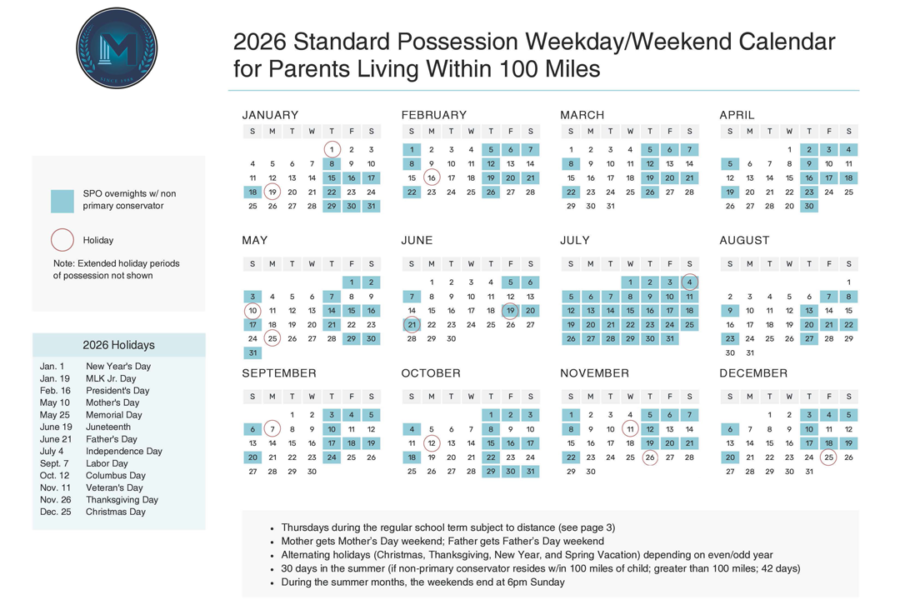
2026 Standard Possesion Order Calendar For Child Custody
Navigating child custody arrangements can be a challenging experience for parents. One of the most common custody schedules is the Standard Possession Order (SPO), which is often used in Texas and other states to provide a clear and consistent plan for parents who share custody of their children. In 2026, the SPO calendar continues to provide a reliable framework for parents to follow. In this post, we’ll break down what the 2026 SPO Child Custody Calendar [Download] looks like and how it works for both parents and children.
What is the Standard Possession Order (SPO)?
The Standard Possession Order is a set of guidelines set by the court to ensure that both parents have regular and fair time with their children after separation or divorce. The SPO calendar provides specific dates and times for visitation, holidays, and other important events to help avoid confusion and conflict between parents.
The SPO allows the child to maintain a stable relationship with both parents, even when they are not living together. It focuses on creating a schedule that prioritizes the child’s well-being while offering parents a clear framework for sharing custody.
2026 SPO Calendar: Key Dates and Features
The 2026 Standard Possession Order calendar builds on previous years’ models, ensuring a consistent visitation schedule. Here are some important features to keep in mind:
Regular Weekends:
First, Third, and Fifth Weekends: The child will spend the first, third, and fifth weekends of each month with the non-custodial parent. The weekend begins on Friday at 6:00 PM and ends on Sunday at 6:00 PM.
Third Weekends: If the month only has four weekends, the custodial parent will have the third weekend. If the month has five weekends, the non-custodial parent will have the fifth weekend.
Midweek Visitation:
Thursday Evenings: The non-custodial parent may have visitation on Thursday evenings from 6:00 PM to 8:00 PM, if the child is at least 3 years old. This provides additional bonding time during the week.
Holidays and Special Occasions:
The SPO calendar also addresses how holidays are shared, such as Christmas, Thanksgiving, and Spring Break. These holidays are alternated each year to ensure that both parents have an opportunity to spend time with the child during these important times. For example:
Christmas Holidays: Parents typically alternate the winter holiday break. One parent may have the child in even years, while the other parent has the child in odd years.
Thanksgiving: Thanksgiving is often shared between the parents, with the non-custodial parent having Thanksgiving one year and the custodial parent the next.
Spring Break: Similar to holidays, parents alternate who gets to spend time with the child during Spring Break.
Summer Vacation:
Extended Summer Possession: The non-custodial parent may also have an extended summer possession period, usually for 30 days. This period is scheduled in advance, ensuring both parents have time to plan for vacations or other special activities.
Why is the SPO Important?
The 2026 Standard Possession Order provides a structure that allows both parents to stay involved in their child’s life. By having a clear and predictable schedule, children benefit from:
Consistency and Routine: Knowing where they will be each weekend and which holidays they will celebrate with each parent provides children with a sense of stability.
Fairness for Both Parents: The SPO is designed to be equitable, giving both parents significant time with their children.
Minimized Conflict: Having a set schedule reduces confusion and misunderstandings between parents, which is especially important when emotions are high during and after a separation or divorce.
Conclusion
The 2026 Standard Possession Order (SPO) child custody calendar remains an essential tool for families dealing with custody arrangements. It ensures that both parents can have meaningful time with their children while providing the stability and consistency that kids need to thrive. Whether you’re navigating custody for the first time or revisiting your existing plan, understanding the SPO calendar is crucial for making informed decisions.
If you’re uncertain about your specific custody situation, it’s always a good idea to consult with a family law professional who can guide you through the legal process and help you create the best arrangement for your child.